

Whether you are managing a five-figure monthly ad spend or overseeing a massive multi-million-dollar global budget, your digital advertising campaigns represent a significant investment. To protect and maximize that investment, conducting a regular performance marketing audit is absolutely non-negotiable.
However, diving into the deep end of your ad accounts without a clear methodology can quickly lead to overwhelm. Worse, it can lead to misdiagnosing problems. Even seasoned marketers and agencies can fall victim to blind spots when analyzing their own campaigns. When you are too close to the daily operations, you start missing the forest for the trees.
A proper digital marketing review should serve as a diagnostic X-ray of your advertising ecosystem. It should uncover hidden bottlenecks, reveal untapped opportunities, and generate actionable performance marketing insights that move the needle.
In this comprehensive guide, we will break down the most common mistakes marketers make when evaluating their accounts. By mastering these performance marketing audit techniques, you will be able to plug the leaks in your funnel, eliminate wasted spend, and drive a higher return on investment.

Mistake 1: Ignoring Tracking and Data Integrity Issues
The absolute bedrock of any successful campaign is accurate data. If your tracking is broken, every decision you make thereafter is based on fiction. One of the most glaring mistakes auditors make is jumping straight into analyzing ad creatives or cost-per-click (CPC) metrics without first verifying that the conversion data is actually correct.
The GA4 and Pixel Problem
With the transition from Universal Analytics to Google Analytics 4 (GA4), many brands experienced severe tracking disruptions. Auditing tracking pixel accuracy in GA4 is a critical first step. You must ensure that your data streams are configured correctly, events are firing on the right triggers, and parameters are passing the correct dynamic values (like transaction revenue).
Common pixel errors include:
- Double counting: Firing a conversion tag on both the button click and the “Thank You” page load.
- Missing values: Passing a static $0 value for e-commerce purchases instead of dynamic revenue.
- Tag firing delays: Pixels loading too slowly, causing lost conversions if the user closes the page quickly.
Resolving the Discrepancies
Fixing conversion tracking discrepancies requires a methodical approach. You will rarely get a 100% match between your ad platform (like Google Ads or Meta Ads) and your backend CRM (like Shopify or Salesforce), due to different attribution windows and ad blockers. However, a discrepancy of more than 10-15% signals a major tracking issue.
Actionable Tip: Use tools like Google Tag Assistant, Meta Pixel Helper, and your browser’s network console. Place a test order yourself. Watch the tags fire in real-time. If you are reporting 100 sales in Google Ads but your Shopify store only shows 60, you are over-bidding based on inflated data. Fix the foundation before analyzing the house.
Mistake 2: Failing to Look Beyond Last-Click Attribution
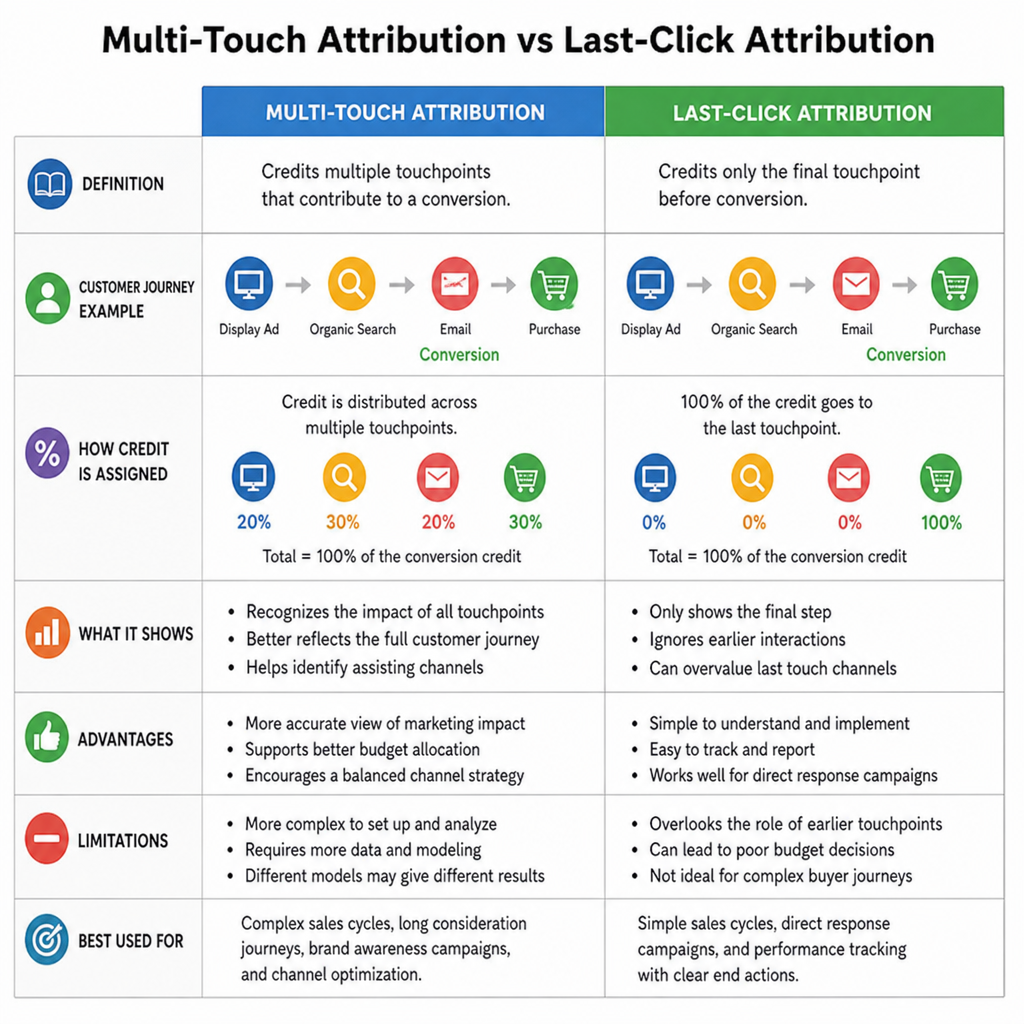
For years, last-click attribution was the default standard. The last ad a user clicked before purchasing received 100% of the credit. Today, treating last-click as the holy grail is a massive audit mistake. Customer journeys are highly complex, often spanning multiple days, devices, and platforms.
The Danger of Ignoring the Assist
Imagine a user who sees your Facebook video ad on their phone, clicks it, browses your site, but leaves. Two days later, they remember your brand, search for it on Google via their laptop, click a branded search ad, and buy. Under a last-click model, Google Search gets all the glory. Facebook looks like a waste of money. If you pause your Facebook ads based on this flawed logic, your Google Search conversions will suddenly mysteriously plummet.
Upgrading Your Analysis
A thorough audit requires a multi-touch vs last-click attribution analysis. You must look at the assisted conversions. Ad platforms and GA4 offer data-driven attribution (DDA) models that distribute credit across the entire user journey based on machine learning.
Actionable Tip: Dive into the “Model Comparison” tool in GA4 or the attribution reports in your ad platforms. Compare your campaigns under a First-Click, Last-Click, and Data-Driven model. You will often find that upper-funnel display, video, or social campaigns are quietly doing the heavy lifting by introducing new users to your brand, even if their direct Return on Ad Spend (ROAS) looks low.
Mistake 3: Overlooking Budget Waste and Misallocation
A core objective of any audit is financial efficiency. Yet, auditors frequently focus solely on trying to squeeze more conversions out of good campaigns, rather than stopping the bleeding from bad ones.
Spotting the Leaks
Marketers frequently ask: how to identify budget waste in digital campaigns? Waste usually hides in the dark corners of your ad account settings.
Look out for:
- Irrelevant Search Terms: In Google Ads, broad match keywords can trigger your ads for wildly unrelated queries. If you are selling “luxury leather boots,” you might be paying for clicks from people searching “how to repair cheap plastic boots.” Audit your Search Terms Report meticulously and build robust negative keyword lists.
- Audience Network Placements: On both Meta and Google, third-party app placements (Audience Network or Google Display Network) often drive low-quality, accidental clicks. Check the placement reports; if you see high spend with zero conversions and a 99% bounce rate, exclude them immediately.
- Geographic Bleed: Are you spending money in regions where you don’t actually ship products or offer services?
Moving the Money Where It Matters
Once you identify waste, it is time for strategic budget reallocation between search and social. If your audit reveals that Google Search is capped by budget but generating a $50 Cost Per Acquisition (CPA), while Meta is spending thousands with a $150 CPA, the fix is simple. Shift funds to the higher-performing channel until it reaches the point of diminishing returns.
By aggressively cutting waste and reallocating funds to proven winners, you are effectively increasing return on ad spend through data-driven insights without actually needing to increase your total marketing budget.
Mistake 4: Disconnecting the Ads from the Landing Page Experience
You can have the most brilliant, highly targeted, cost-efficient ad in the world, but if you send that traffic to a confusing, slow, or irrelevant landing page, you will lose the sale. An ad’s job is to get the click; the landing page’s job is to get the conversion.
Auditing the ad account while ignoring the destination URL is like reviewing a restaurant based only on its menu design, without ever tasting the food.
Evaluating the Destination
To uncover why traffic isn’t converting, you must conduct a step-by-step landing page conversion assessment.
- Message Match: Does the headline of the landing page exactly match the promise made in the ad? If your ad offers “50% off Winter Coats,” but the landing page takes users to a generic homepage featuring summer swimwear, they will bounce instantly.
- Above the Fold UX: Is the Call to Action (CTA) visible without scrolling? Is the value proposition immediately clear?
- Page Load Speed: A one-second delay in page load time can drop conversion rates by up to 20%. Run the landing URLs through Google PageSpeed Insights.
- Mobile Optimization: More than half of all ad clicks happen on mobile devices. Don’t just resize your desktop site; ensure buttons are thumb-friendly, forms are short, and text is legible.
Actionable Tip: Look at the “Landing Page” reports in your ad platforms. Sort by highest spend and lowest conversion rate. These are your biggest opportunities. Use heatmapping tools like Hotjar or Clarity to see exactly where users are getting frustrated and dropping off.

Mistake 5: Neglecting Creative Performance and Ad Fatigue
In modern performance marketing, particularly on social channels like Meta, TikTok, and LinkedIn, the creative is the targeting. Algorithms have become so smart that broad targeting relies heavily on the ad creative to find the right audience. Consequently, your visual assets dictate your success.
A major audit mistake is looking only at numbers (bids, budgets, audiences) and ignoring the actual visual and textual content the user sees.
Spotting the Burnout
Even the best ad creative has a shelf life. As the same audience sees the same image or video repeatedly, they develop “banner blindness.” You need to know the creative fatigue indicators for social media ads.
Watch for these three metrics occurring simultaneously over a 7-to-14 day period:
- Rising Frequency: The average user has seen the ad more than 3-4 times.
- Dropping Click-Through Rate (CTR): People are scrolling past without engaging.
- Spiking Cost Per Acquisition (CPA): Because engagement is dropping, the algorithm charges you more for impressions, driving up your cost per result.
The Creative Pipeline
To fix this, you must analyze why certain creatives worked in the past. Did user-generated content (UGC) outperform polished studio shots? Did short-form video outpace static carousels?
Actionable Tip: Don’t just pause tired ads; build a systematic creative testing pipeline. Test one variable at a time: keep the winning video but test a new hook in the first three seconds, or keep the winning image but change the headline. This ensures you are constantly rotating fresh assets into your campaigns based on proven data.
Mistake 6: Treating All Funnel Stages as Equal
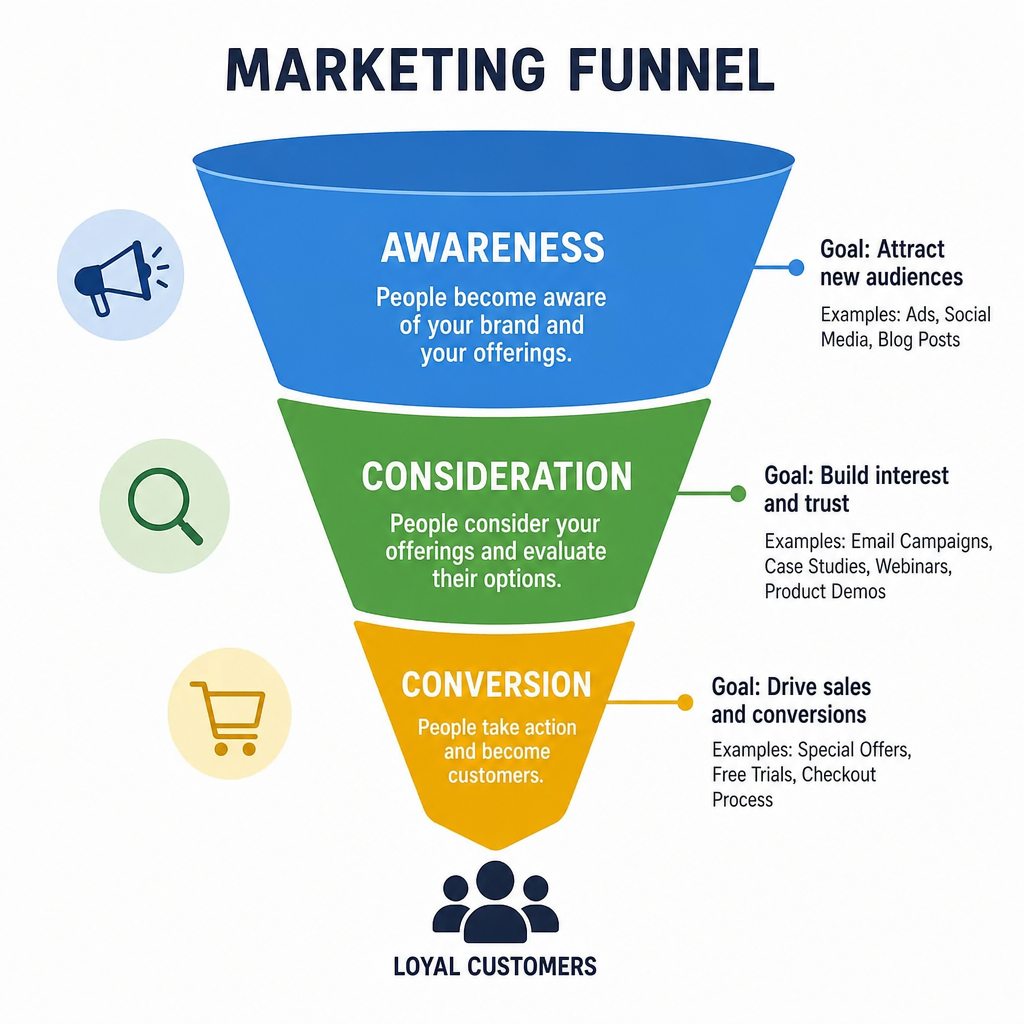
When conducting an audit, it is easy to export a massive spreadsheet of all your campaigns, sort by Return on Ad Spend (ROAS), and conclude that the campaigns at the bottom are “losers.” This is a fundamental misunderstanding of the marketing funnel.
A top-of-funnel (ToFu) brand awareness video campaign should never be judged by the same metrics as a bottom-of-funnel (BoFu) branded search campaign or an abandoned cart remarketing ad.
Aligning Metrics with Intent
A proper audit requires a full-funnel efficiency metrics evaluation. You must map your campaigns to the customer journey and assign appropriate Key Performance Indicators (KPIs) to each stage:
- Top of Funnel (Awareness): The goal is to reach new, relevant audiences cheaply. Measure Cost Per Mille/Thousand Impressions (CPM), Video View Rate, Cost Per View (CPV), and Outbound CTR.
- Middle of Funnel (Consideration): The goal is to drive qualified traffic and micro-commitments. Measure Cost Per Click (CPC), Landing Page Views, Time on Site, and micro-conversions (like newsletter sign-ups or adding items to a cart).
- Bottom of Funnel (Conversion): The goal is revenue. Measure Cost Per Acquisition (CPA), Return on Ad Spend (ROAS), and Conversion Rate.
If you audit a ToFu campaign and find it has a low ROAS, that is normal. However, if it has a massive CPM and terrible CTR, that is when you flag it as failing. Evaluating campaigns based on their specific goals prevents you from accidentally killing the campaigns that are feeding your entire ecosystem.
Mistake 7: Poor Bidding Strategy Choices
Ad platforms have shifted heavily toward machine learning and automated bidding over the last five years. Google’s Smart Bidding and Meta’s Advantage+ features are incredibly powerful. However, relying blindly on the algorithm without understanding the context is a recipe for wasted spend.
The Algorithm vs. The Marketer
A vital part of your audit is conducting a manual vs automated bidding evaluation.
When Automated Bidding Fails: Automated bidding (like Target CPA or Target ROAS) requires significant data volume to learn effectively. Platforms generally recommend at least 30 to 50 conversions per month for the algorithm to optimize. If you apply a Target ROAS strategy to a brand-new campaign with zero historical data and a tiny budget, the algorithm will panic. It will either throttle your spend to zero, or it will bid wildly and waste your budget. In these low-data scenarios, starting with Manual CPC or Maximize Clicks is often a smarter play to build initial volume.
When Automated Bidding Wins: Conversely, if you have a mature campaign generating hundreds of stable conversions per month, and you are still manually tweaking CPC bids by pennies every day, you are wasting your time and limiting your potential. You cannot compete manually with an algorithm that analyzes millions of real-time signals (user device, location, time of day, browsing history) for every single auction.
Actionable Tip: Review your bidding strategies. Are your Target CPAs set too aggressively low, choking campaign volume? Are your Maximize Conversions campaigns running without a target cap, causing your CPA to skyrocket? Ensure your bidding strategy aligns with your actual historical data and business goals.
Mistake 8: Misunderstanding When and How to Scale
Finding a winning ad campaign feels fantastic. The immediate instinct is to dump a massive amount of budget into it to multiply the profits. Unfortunately, algorithms do not respond well to sudden, aggressive changes.
One of the most common ways marketers break their own successful campaigns is by doubling the budget overnight. This throws the campaign back into the “learning phase,” resetting the algorithm’s understanding of your audience. Frequently, the performance crashes, the CPA doubles, and the marketer is left wondering what went wrong.
The Blueprint for Growth
During an audit, you need to establish a framework for scaling profitable ad sets systematically.
There are two primary ways to scale:
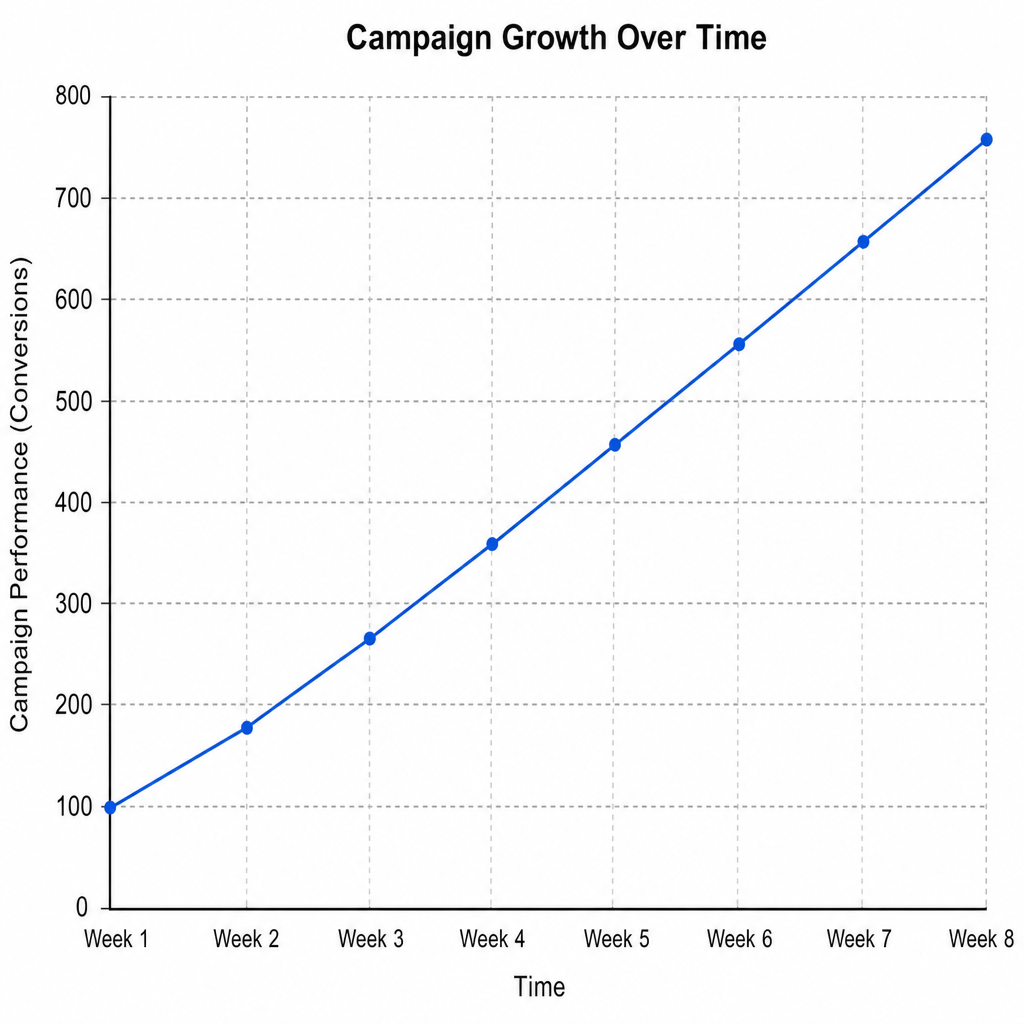
- Vertical Scaling (Increasing Budget): To avoid triggering the learning phase, increase the daily budget of a winning ad set by no more than 15% to 20% every 48 to 72 hours. This allows the algorithm to slowly expand its net without losing efficiency.
- Horizontal Scaling (Expanding Audiences/Creatives): Instead of just raising the budget on one ad set, duplicate the successful ad into new campaigns targeting different lookalike audiences, new geographic regions, or broader interest categories.
Actionable Tip: If your audit reveals campaigns that are capped by budget but highly profitable, don’t just hike the budget by 200%. Implement an automated rule to increase the budget by 15% automatically every few days as long as the CPA remains below your target threshold.
Mistake 9: Operating in Silos Instead of a Holistic View
Digital marketing channels do not exist in a vacuum. Your customers are bouncing between Google, Instagram, TikTok, YouTube, and email before making a purchase decision.
A massive audit mistake is reviewing Google Ads on Monday, Meta Ads on Tuesday, and Email on Wednesday, without ever looking at how they interact. This siloed approach leads to overlapping efforts, double-counting conversions (as mentioned in the attribution section), and an inaccurate understanding of your true unit economics.
The Big Picture Approach
So, when should you perform a cross-channel audit? The answer is: at least quarterly, or whenever you notice a significant, unexplained shift in your overall business revenue that doesn’t map cleanly to just one channel.
You must focus on optimizing customer acquisition cost across channels. This means looking at your blended CPA or Marketing Efficiency Ratio (MER).
- Blended CPA: Total Marketing Spend across all channels / Total New Customers.
- MER: Total Business Revenue / Total Marketing Spend.
By auditing from a holistic perspective, you might realize that while your Facebook Ads CPA looks slightly high in the platform, increasing Facebook spend actually drives a massive surge in cheap, highly profitable Direct Traffic and Branded Search volume. If you only look at Facebook in a silo, you might pause it and inadvertently damage your overall revenue.
Mistake 10: Underutilizing First-Party Data
In the era of privacy updates, iOS14, cookie deprecation, and ad blockers, relying solely on third-party platform data (like Meta’s interest targeting) is becoming increasingly expensive and less effective.
If your audit reveals that you are constantly trying to find net-new audiences via platform algorithms while ignoring the customers you already have, you are leaving immense amounts of money on the table.
Harnessing What You Own
A modern audit absolutely must include evaluating first-party data strategy for remarketing. Your CRM list—past purchasers, email subscribers, abandoned carts, and lead forms—is your most valuable marketing asset.
Are you actively syncing your CRM segments with your ad platforms?
- Lookalike Audiences: Upload a list of your top 10% highest Lifetime Value (LTV) customers to generate high-quality lookalike audiences. This gives the algorithm a massive head start compared to basic demographic targeting.
- Exclusion Lists: Are you actively excluding recent purchasers from your prospecting campaigns? If not, you are wasting money showing ads to people who bought from you yesterday.
- Offline Conversion Tracking (OCT): If you generate leads online but close sales over the phone or in-store, are you feeding that final closed-won revenue data back into Google or Meta? If not, the platform only optimizes for cheap leads, not actual paying customers.
Actionable Tip: Work with tools like Zapier or native platform integrations (like HubSpot to Google Ads) to ensure a seamless, automated flow of first-party data back into your ad accounts to train the algorithms on what your ideal customer actually looks like.
Structuring Your Own Audit Framework
Now that you know the major pitfalls, how do you ensure you don’t fall into them? The secret to consistent success is standardization. You need a repeatable process.
It is highly recommended that you develop a standardized paid media health check checklist. This checklist should act as your North Star during every review, ensuring you don’t let personal biases or fatigue cause you to skip crucial steps.
A Quick Paid Media Health Check Checklist
To get you started, here is a high-level summary of the areas your checklist should cover based on the techniques discussed:
- Tracking & Foundation:
- Are GA4 events firing correctly?
- Is dynamic revenue passing accurately?
- Is the discrepancy between platform data and backend CRM under 15%?
- Budget & Waste Analysis:
- Have Search Term reports been reviewed and negative keywords added?
- Have poor-performing placements/apps been excluded?
- Are budgets flowing to the highest-performing channels based on blended ROAS?
- Creative & UX:
- Is ad frequency healthy (under 3-4 for prospecting)?
- Is a creative testing framework in place?
- Does the landing page message match the ad?
- Is mobile page speed under 3 seconds?
- Strategy & Settings:
- Are bidding strategies appropriate for the data volume?
- Are audiences properly excluded (e.g., past purchasers from prospecting)?
- Is first-party data synced for remarketing and lookalikes?
By methodically working through a list like this, you transition from simply “looking at numbers” to conducting a true, high-value strategic review.
Conclusion
Conducting a thorough and effective performance marketing audit is part science and part art. It requires a deep understanding of data, user psychology, and platform mechanics. By consciously avoiding these ten common mistakes, you elevate your analysis from basic reporting to strategic problem-solving.
Remember, the goal of utilizing proper performance marketing audit techniques is not to find fault or point fingers at past management. The goal is to uncover the truth of the data.
Whether you are identifying budget waste, fixing conversion discrepancies, mapping out multi-touch attribution, or refining your landing page experience, every step you take brings you closer to generating profound performance marketing insights.
Commit to a routine digital marketing review. Build out your checklist. Trust the data, continuously test your assumptions, and you will build a resilient, highly profitable advertising machine that scales predictably in any market environment.
